
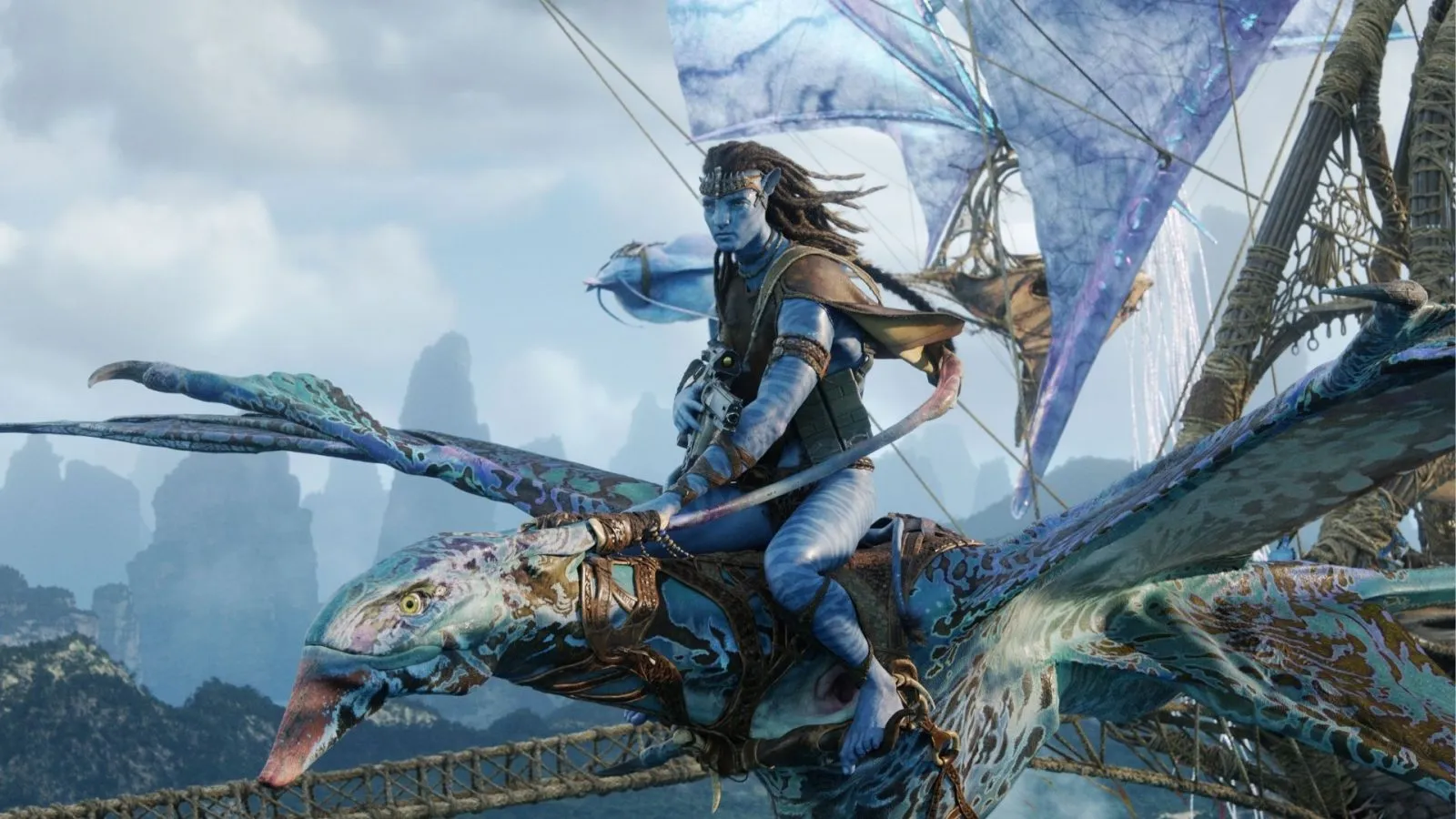
With Avatar: Fire And Ash now released in cinemas the one thing that movie goers are probably not expecting is a film that not only looks visually spectacular but concentrates so much on characterisation that it genuinely has the ability to affect its audience emotionally.
As The Phuket News recently found out when attending director James Cameron’s official press conference the emotional side of Avatar: Fire And Ash was something that he was planning for from the very beginning.
“I think we’ve been laying the groundwork for this story for a while,” he says with a wry smile. “ In the first film, we established a world and a relatively simple love story, because our eyes were focused outward on everything around us and the new creatures. And it was sort of shockingly new. Nobody’d really seen anything like that before. I’d never done anything like that before. The second film, we take you to different parts of that world, and we start to make the plot more complex and introduce new characters, including the Tulkun and the Reef people and so on.”
“So we go to a next level of complexity with the new film by introducing the Ash People,” he continues. “ But also because we’ve had this tragic event in movie two, the death of the eldest son. I felt it was really, really important to ground the film, because it is so fantastic visually. I mean, fantastic in the sense of fantasy. Fantasmagoria, right? To ground the film in authentic human responses to things like, you know, trauma and loss and grief and so on.”
Those are themes and topics that Avatar: Fire And Ash delve into quite deeply but Cameron is well aware that many action blockbusters would shy away from it.
“I think commercial filmmaking tends to kinda gloss over that stuff,” he explains. “Usually when somebody dies in a movie, you know, the wife dies and the husband goes on a killing rampage, and we all celebrate that violence for the next two hours. I don’t think commercial filmmaking deals with it honestly and authentically. And I’ve had a lot of loss in my personal life over the last 10 years or so. And grief doesn’t just stop like that. You know, and it’s not a trigger to just go.”
“Now, Neytiri becomes very kind of dark and she starts to live in a kind of a hatred, which makes her kind of a racist,” he explains as we delve into the darker deeps of the film. “ You know, and then she’s got to fight her way through that and see people for their values and for the good that’s inside them regardless of the color of their skin and all that sorta thing. So I just felt that this was the opportunity after laying the foundation for two movies to go much deeper on the characters and on the emotions.”
“And, you know, if nothing else, to sorta demonstrate that what we’re doing in that volume when we’re doing performance capture is, you know, some of the best work these actors have done in their careers,” he continues. “ And we’re talking about Academy Award winners, Kate Winslet and Zoe Saldaña. Three-time Academy Award nominee Sigourney Weaver. And they will tell you this is some of the best work that they’ve done, but it tends to get overlooked, right? I think the industry at large and the acting community has historically said, “Well, this isn’t real acting.”
Cameron is also quick to talk about the fact that some of the criticism about the way the Avatar films were filmed comes back to the secretive nature of film-making.
“You can’t understand what you haven’t been exposed to,” he says seriously. “And I hid our process for a long time. I hid it behind the curtain, because I wanted the public to just respond to the characters as if they were real people. I’m kinda going off a little bit on your question, but I think it’s all good, right? I mean, whatever we want to talk about. And I didn’t want the public, the audience, to think of a person in a head rig with a little camera right here and a marker suit.”
“You know, I thought that would detract from the magic,” he continues. “But I realize it’s been a disservice to my wonderful cast over the years. I mean, I still read in media from time to time that Sigourney Weaver voiced Kiri. She didn’t voice Kiri. She performed Kiri for 18 months. Now just to put that in perspective, it took six months to shoot Titanic. We worked three times that long. Now, we were capturing two movies. We were doing two and three at the same time. But if this was just voicing, we’d be done in days, not months or years.”
“So, it’s a very intricate, very detailed process,” he says. “And we’re allowed to have that kinda time because it’s relatively inexpensive. Avatar movies cost a lot. I’m not hiding that fact. It cost an awful lot. But most of that is in the finish work, to bring that world to life in CG and VFX. The actual capture work with the actors, relatively inexpensive. So, we don’t sorta cram in all our rehearsal at the beginning of the shoot and then start filming, which is how most films work, ’cause every production day’s expensive.” “We just do the rehearsal the day of,” he continues. “Every single day. We start in the morning. We rehearse the new scenes. We talk about them. Sometimes we just sit there on the set. And the camera guys go get coffee and we talk about the scene. So there’s a lot of thought that goes into it. There’s a lot of rehearsal work that goes into it. And then we stand the scene up and we start to play. We start to experiment. We start to try different staging and so on. I’m a very prepared director when I’m shooting live action. But when I’m doing capture, it’s very free. I don’t pre-vis it. I don’t storyboard. I don’t tell the actors where to stand. I let them find the scene. And so I thought, man, I’m hiding behind a curtain all this magic that’s happening. And the acting community doesn’t understand it. I don’t think the media community at large really understands it because we haven’t told anybody. Right? So that’s why I’m telling you now.”












No Comments